A first-timer's manual · Generosity Roundtable
A game that takes generosity seriously, and you are about to host it.
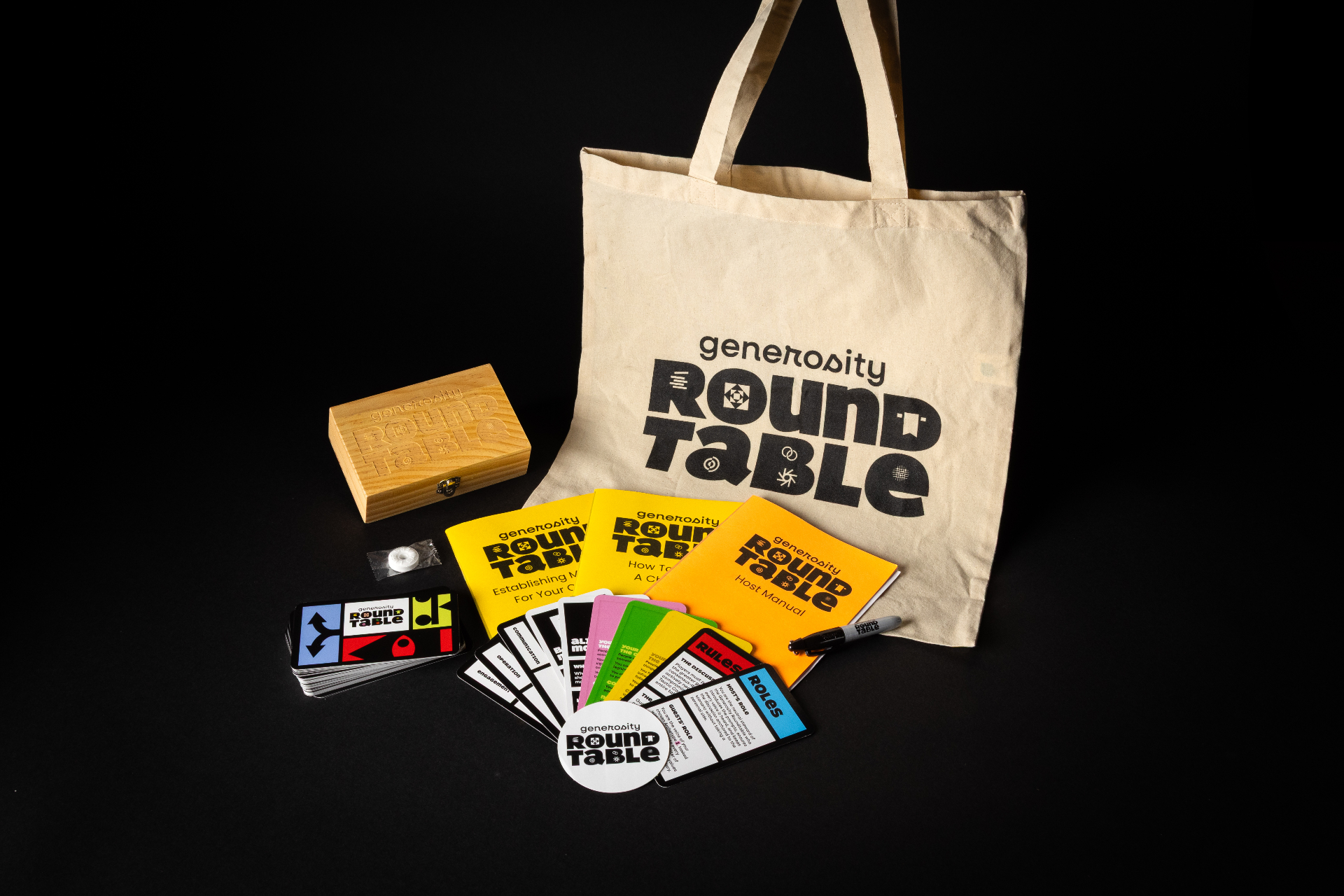
You opened the box. This walks you from there to hosting your first game for at least two other people. A session runs about half an hour. The plan for getting there takes about that long to read.
Start here
01 · Find your archetype· 90 sec
Sit down as a player first.
Ten archetypes gather at every Roundtable, and one of them already sounds like you. Take the short quiz and find yours before you host anyone.
Already know it? Tag yourself
Want to show it off? Find the archetype social squares in Host Resources
02 · Learn the game· ≈ 5 min
Three things a host needs in their bones.
01
You play a character, not yourself.
The Roundtable runs on consensus. Guests speak as an archetype and run every prompt through that character's values and its one No Compromise. Nobody votes, nobody persuades, nobody wins an argument.
02
Your job is to steer, not to weigh in.
As Host you are the neutral steward. You introduce the prompts, keep every voice in the room, and hold the table to the scenario. Your own opinion stays in your pocket.
03
The rule above every rule is that it stays fun.
This is a game, not a board meeting. Nothing here is binding. If the table gets tense or stalls on something too raw, swap in a made-up organization and keep playing. The learning still lands.
03 · Meet the cast
Ten ways of caring. Every table needs a few of them.
Read them as a cast list. Each archetype carries a role in the community, a thing it identifies with, and a single line it will not cross, its No Compromise. You are looking for the two or three that will make your first table crackle.

Evaluator
Asks whether it works. Lives for evidence and tradeoffs, and fears effort that feels meaningful yet changes little.

Builder
Makes things function. Thinks in capacity and follow-through, and fears urgency that ignores what it takes to last.

Trustkeeper
Asks whether it can be trusted. Guards standards and consistency, and fears shortcuts that spend credibility.

Ambassador
Signals legitimacy by association. Reads perception early, and fears being tied to efforts that contradict its values.

Storykeeper
Makes sense of what happened and notices which stories get repeated. Refuses to let a hard institutional history get sanitized into tidy branding.

Symbolist
Watches how meaning travels. Thinks in language and signal, and fears inconsistency that quietly erodes trust.

Connector
Knows who is actually involved. Keeps decisions tied to real people, and fears distance that turns people into abstractions.

Steward
Looks after what already exists. Carries memory and relationships, and fears change that breaks trust faster than it builds it.

Advocate
Called in when something feels unjust. Links one experience to a wider pattern, and fears solutions that preserve harmful systems.

Disrupter
Turned to when incremental change is not enough. Questions the fixed, and fears comfort that delays what must be done.
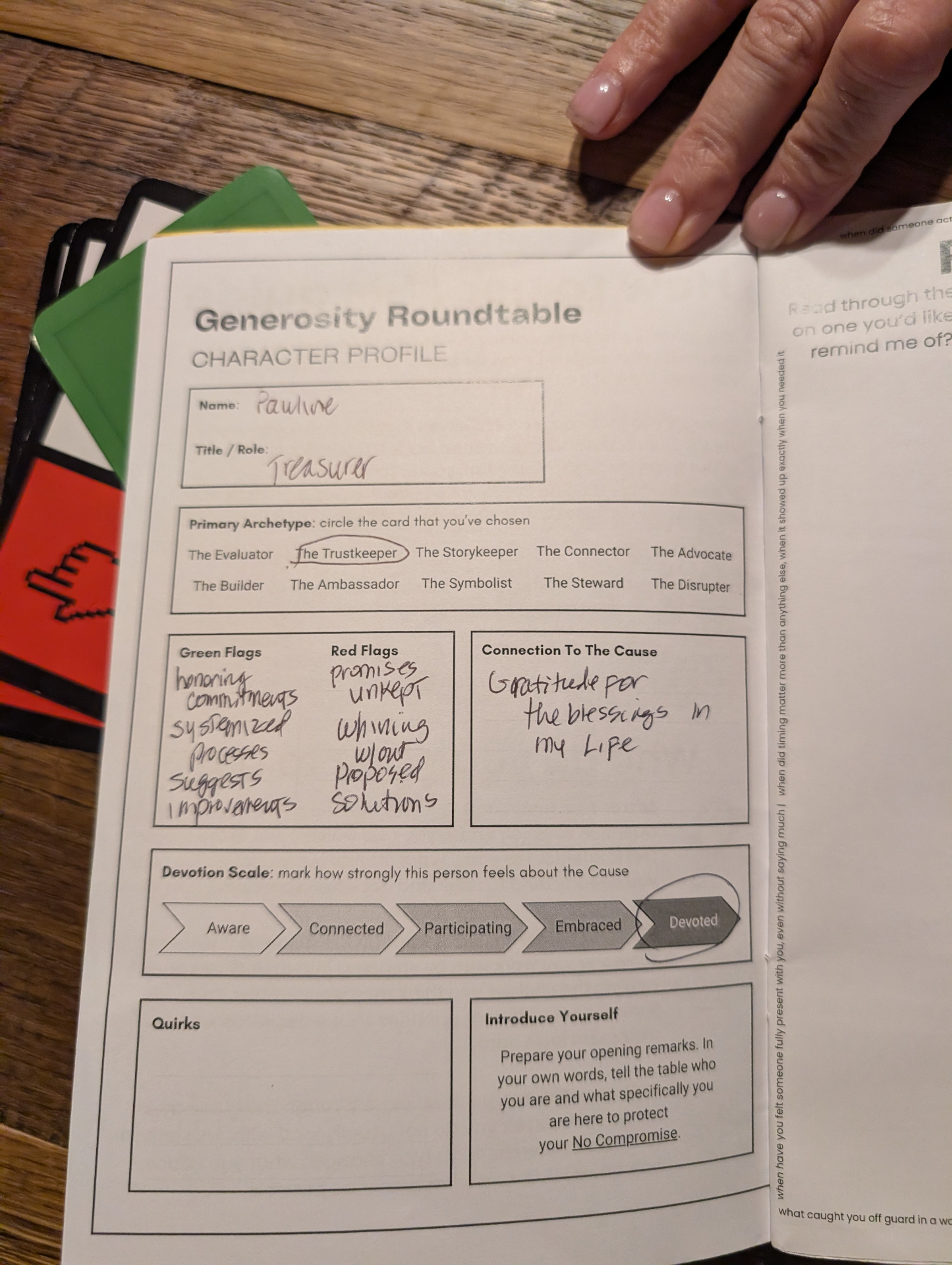
“My connection to the cause is gratitude for the blessings in my life. And I am devoted.”
Worked example · Character sheet
Pauline Lally
Treasurer of the board · playing the Trustkeeper
- Green flags
- honoring commitments, systems that hold, suggestions that come with a fix attached.
- Red flags
- promises left unkept, complaints offered without a solution.
- Connection
- gratitude for the blessings in her life, and a plain devotion to service.
- No Compromise
- she will not let the table take a shortcut that spends trust it cannot earn back.
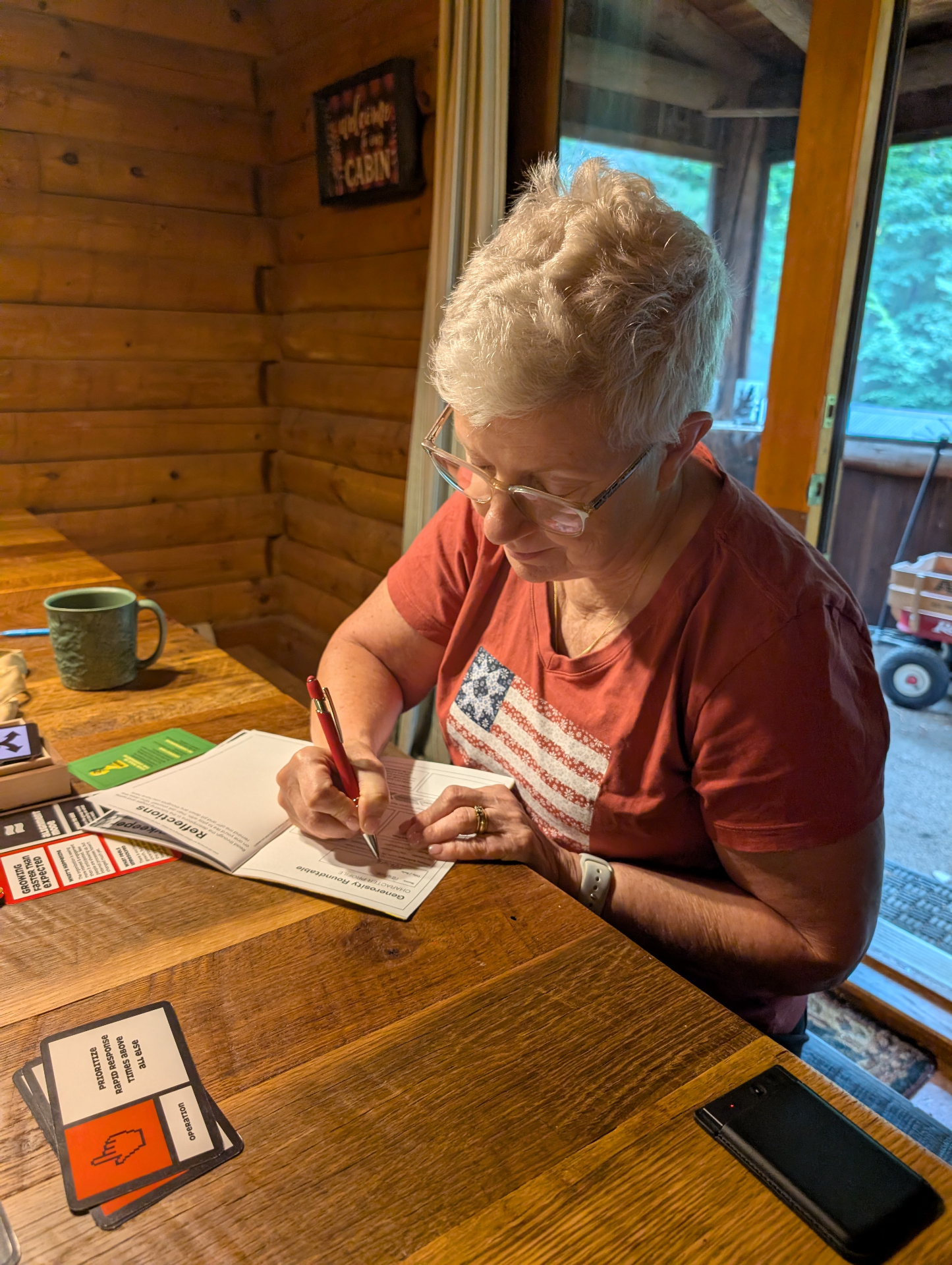
A quiet table, a pen, and one person deciding who she is going to be tonight.
Watch the full character sheet overview04 · Choose why you're gathering· ≈ 3 min
You've built a character. Now name what pulled everyone to the table.
A Roundtable needs a reason. The Scenario Cards give you a situation worth chewing on, and the Conversation Cards shape how the table talks about it. Pick one Scenario that sits close to something your people are actually carrying. That is your why for the night.
The what
Scenario Cards
The situation on the table. Growth pains, a hard ask, a shift in the field. Pick the one that names a real tension.
The how
Conversation Cards
The shape of the talk. Alignment, Boundary, or Action. For a first game, Alignment keeps things generous.
Host tool
Build it into a Scenario Sheet
Once you know your why, the Scenario Sheet Generator turns it into a printable one-pager: the situation, the core question, and just enough context to hand your table.
Bring it to Step 05 when you set the table.
Give just enough context, not the whole file.
Guests play better with a little grounding. Read the Scenario aloud, then add two or three specifics tied to that scenario, not a full org history. If the table already had a conversation to build on, great, pick up there. When folks get stuck, drop in one more detail that connects back to the core why. Keep the frame tight and let the characters do the work.
Optional · if you want distance
Don't want to use your own nonprofit yet?
Generate a fictional organization to hold the scenario. It gives the table a shared “who” without exposing anyone's real work on night one.
Pick a size, cause area, and community. Share only the parts that fit the scenario.
The Scenario gives the why. The Conversation Card gives the how. Your character sheets give the who. That is enough to sit down.
05 · Set the table· ≈ 10 min prep
Five quiet moves you make on your own.
Do these before anyone sits down, and the game almost runs itself.
- 01
Name the real tension.
Choose a Scenario Card that matches what your group is actually carrying. The closer it sits to a live nerve, the better it plays.
- 02
Choose how you win.
Pick one Mode, and for a first game pick Alignment, where you win by agreeing on what matters most. Boundary and Action are sharper, and they can wait.
- 03
Write the one question.
Boil the scenario down to a single core question. One question keeps the scope tight and pulls the real tension to the surface. The Scenario Sheet Generator will lay this out for you on a printable one-pager.
- 04
Deal three cards per round.
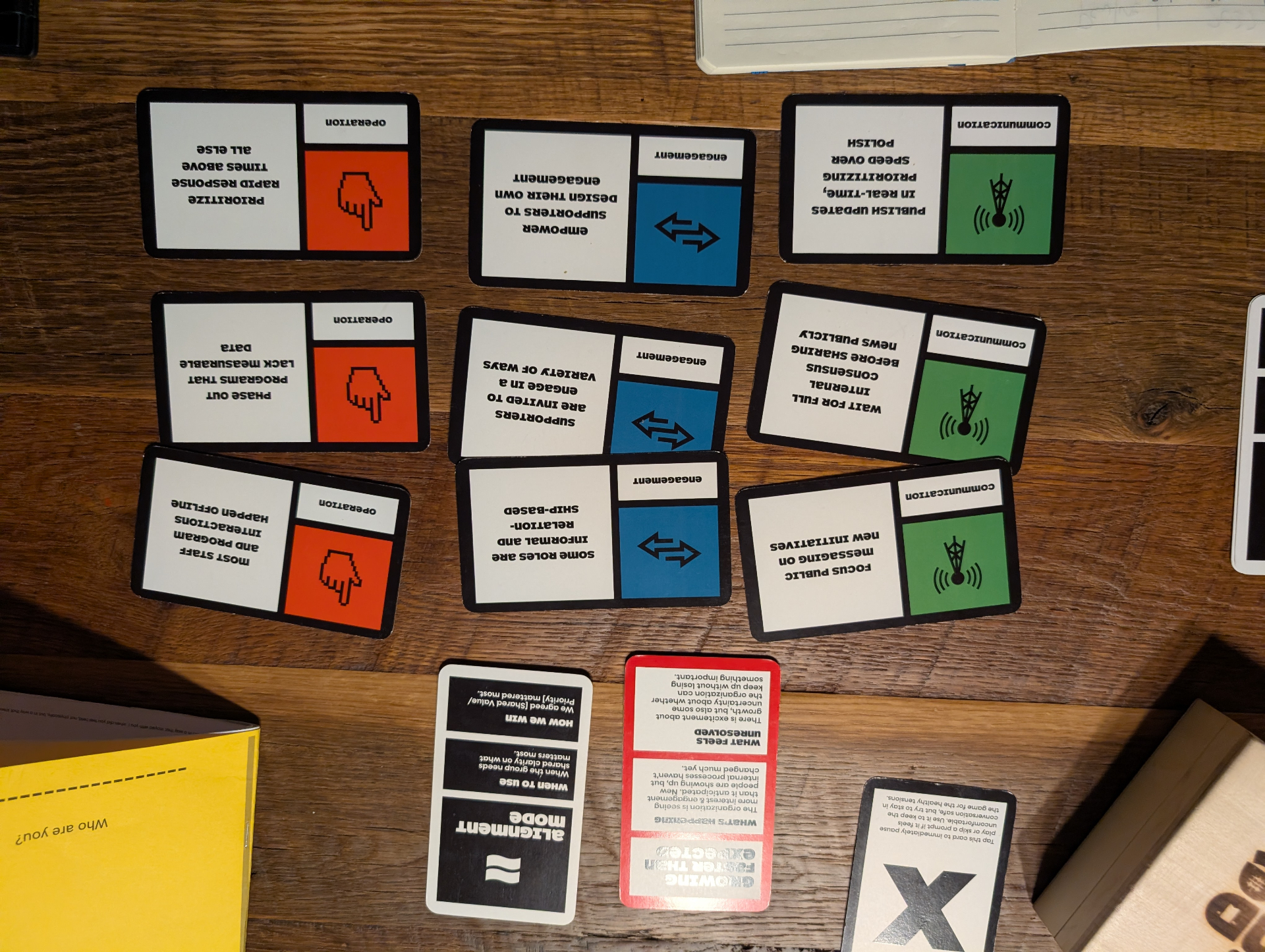
Lay out three Tactic Cards each for Communications, Engagement, and Operations. Arrange every trio as a pole, a third way, and a pole. Never let the middle card read as a comfortable compromise.
- 05
Print your kit.
Pull the character sheets and cards you need. Your smallest possible table is you plus two guests.
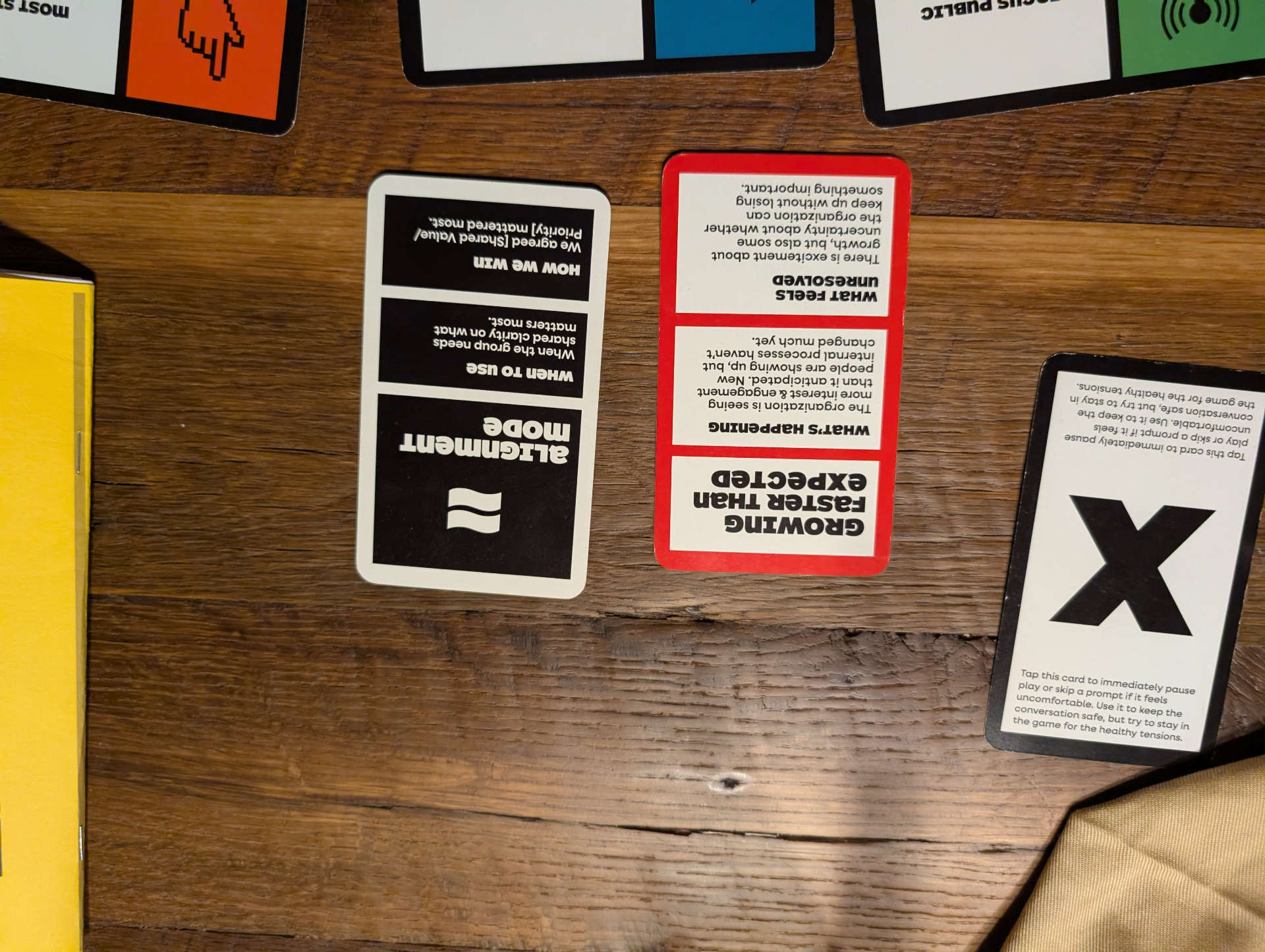
Your first time through carries extra scaffolding by design. Go slower than you think you need to.
06 · Run your first game· ≈ 30 min
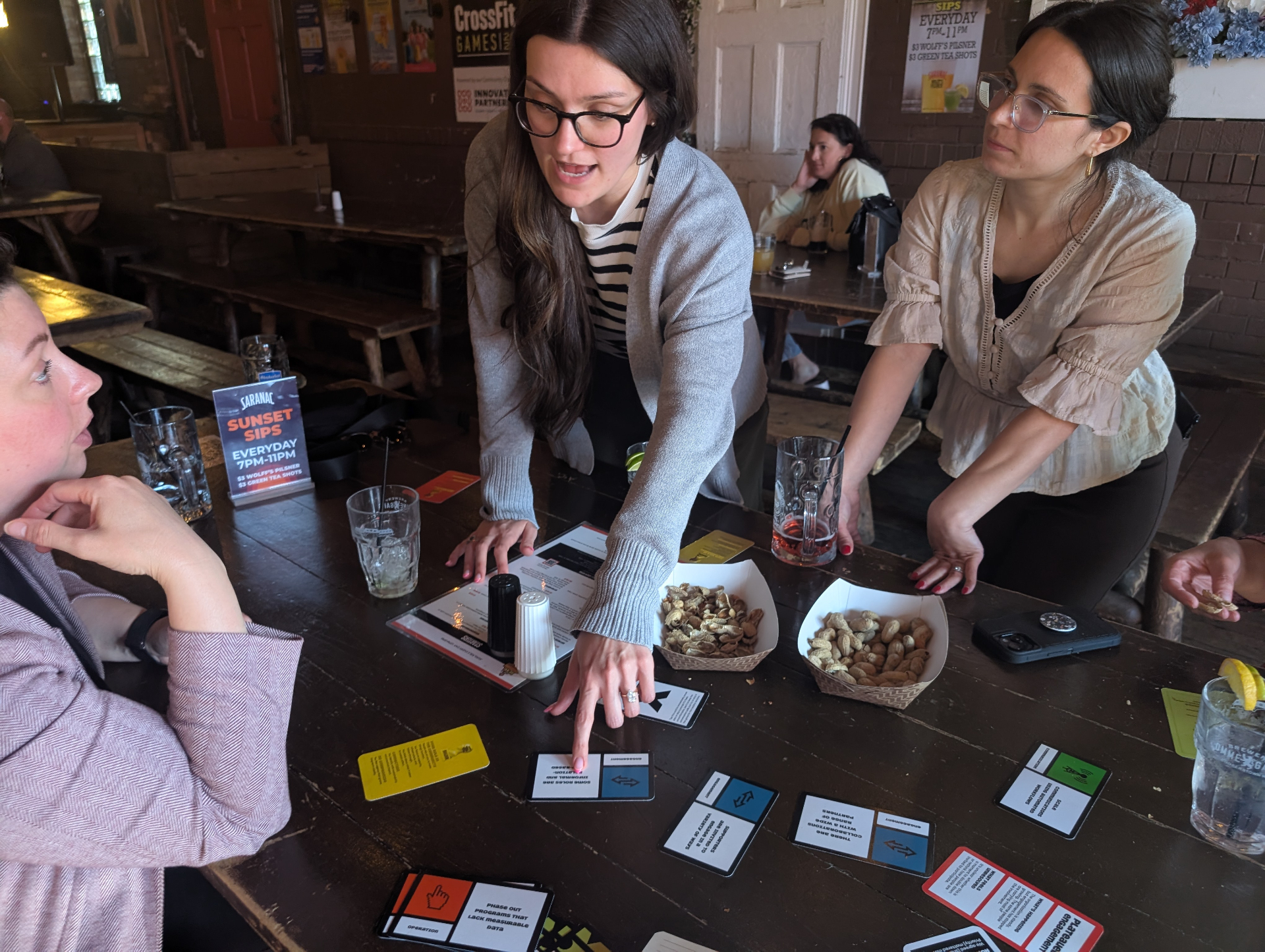
Two other people is all it takes. Set three chairs and you have a table.
Guests are seated. From here it runs as one clean arc. They become someone, meet the question, play three rounds, and make sense of what happened together.
- 01
Onboard through character creation.
Each guest picks an archetype and fills their sheet. Under five minutes.
- 02
Introduce in character.
Each person says who they are and declares their No Compromise to the table.
- 03
Put the question on the table.
Read the scenario and the core question aloud. Confirm everyone sees how their character meets it.
- 04
Play the three rounds.
Communications, then Engagement, then Operations. Draw the three cards, everyone responds in character, and the table reaches consensus on one. If it stalls, send them back to the cards.
- 05
Reflect as a table.
Read the three chosen cards back in their exact words. Then ask, in order: what did we protect, what shifted and what caused it, what does this tell us, and what can we do with it.
- 06
Close with a move.
End on what we want to do about that. You leave with a Learning Summary and not a decision. Anything unresolved goes to a Parking Lot for a real conversation later.
07 · Find your people
You set a table. Now find the others who are setting theirs.
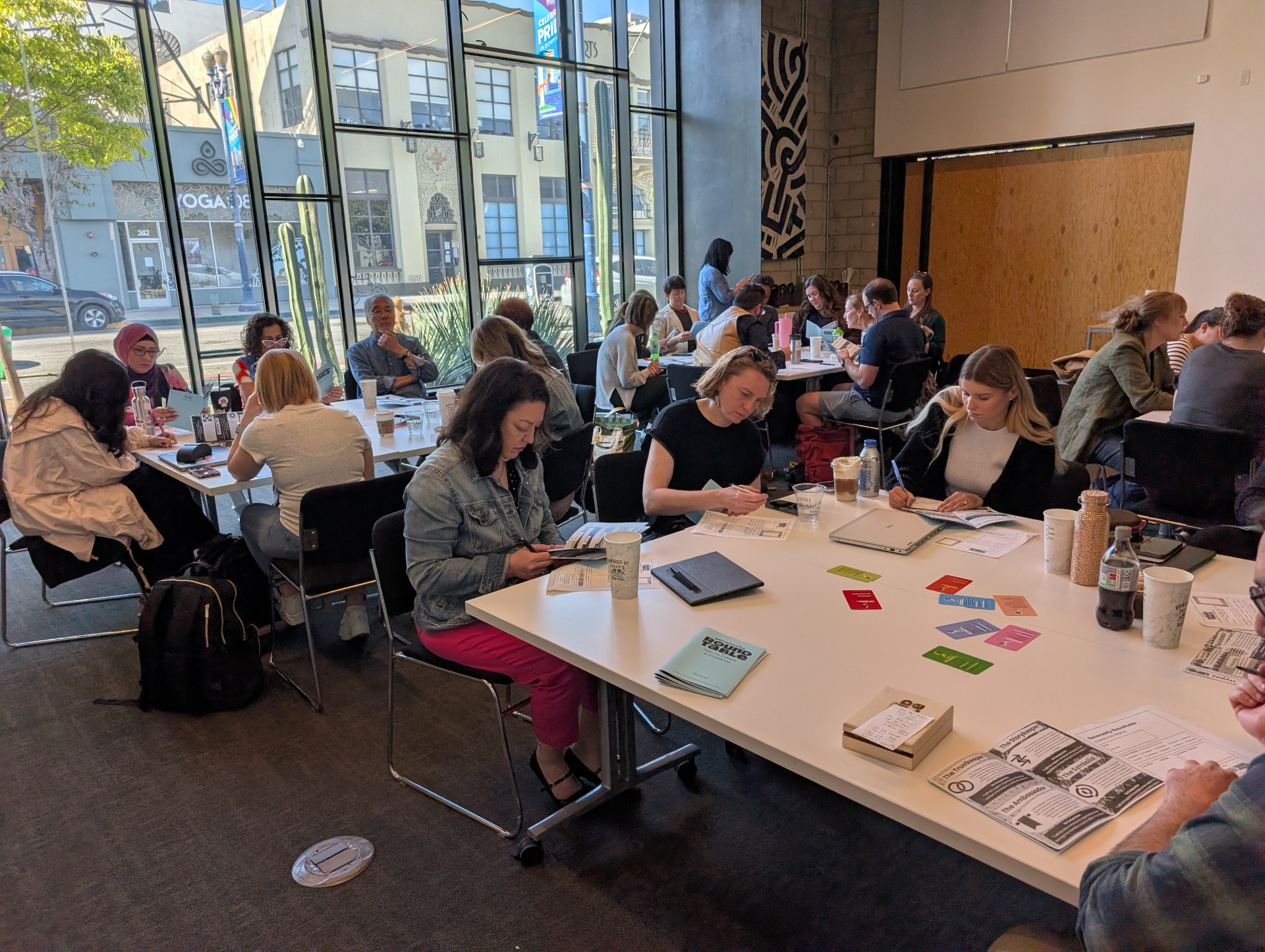
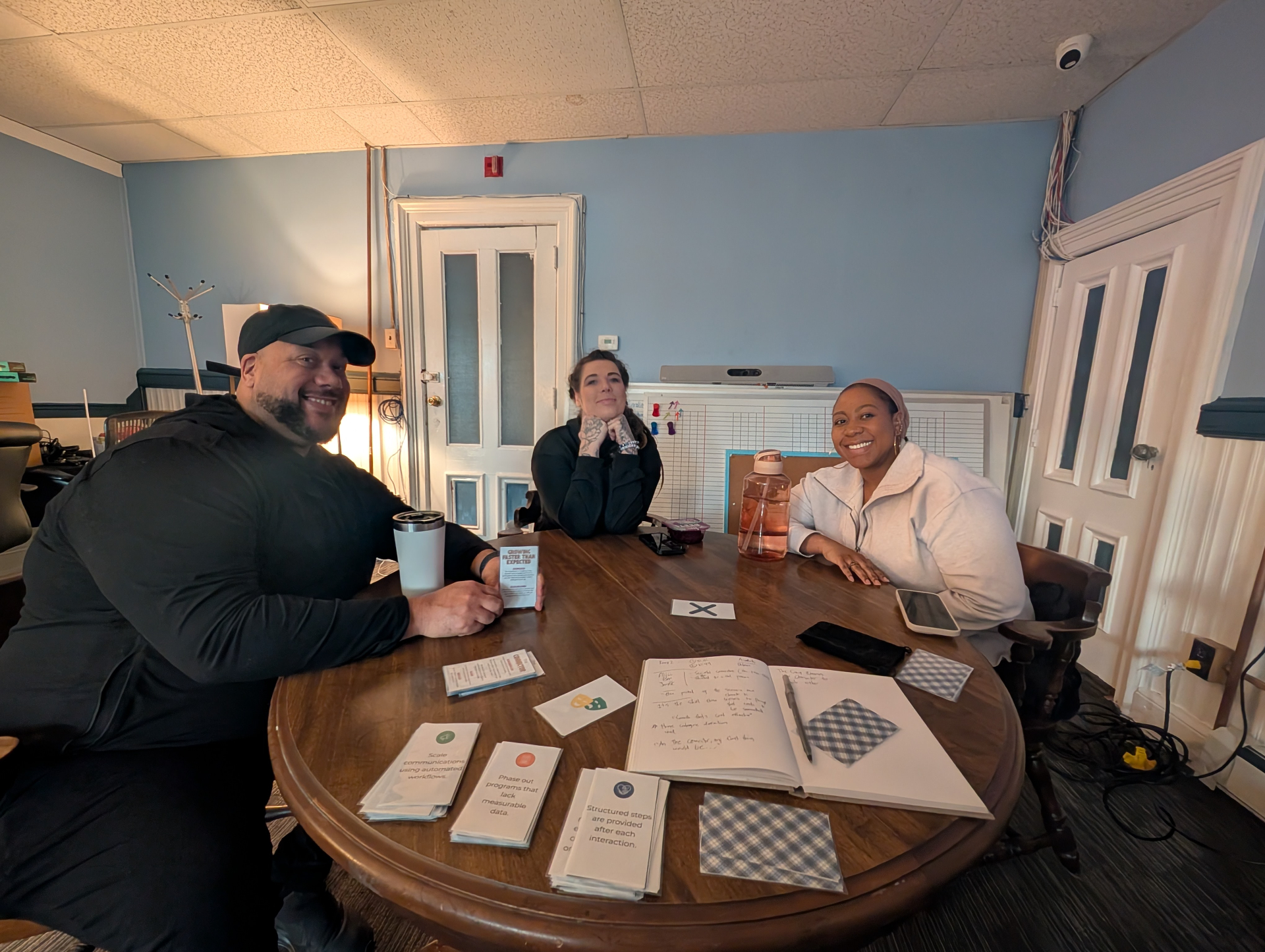
Tables are gathering, online and in person. Pull up a chair, watch a few real sessions, and read as deep as you like between games.
Find a table
Upcoming games
See who is hosting near you and drop into a session as a guest first.
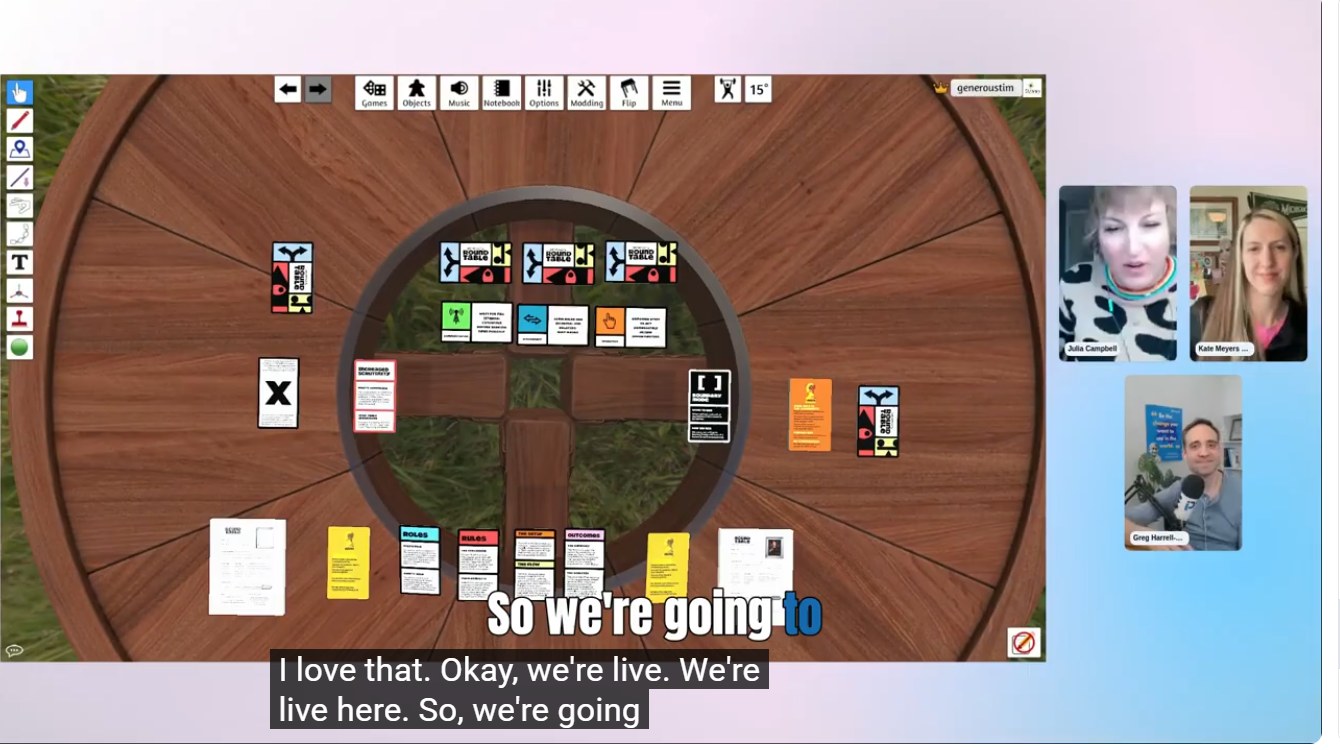
Watch real sessions
The Generosity Spectrum on YouTube
Read deeper
The rules and the wiki
Everything about the game, kept open on the shelf.
Hear from us weekly
Newsletter & early notice